Small Space, Big Impact: Feather Display Ideas for Flats
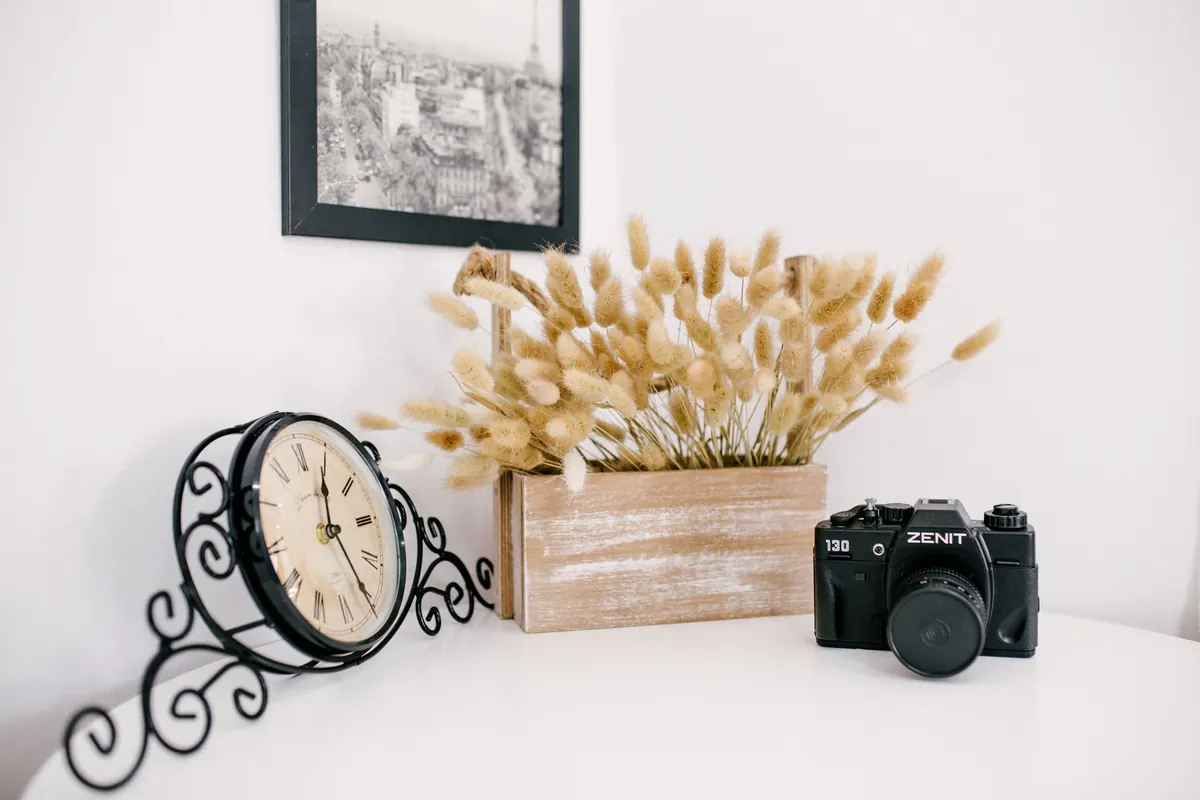
Small flats ask a lot of every object on display. A feather arrangement has to hold its own on a shared shelf, work around a rented wall you cannot drill, and still look deliberate rather than cluttered. Feathers happen to suit that brief rather well: they are light, thin, and read as height in a way a chunky ornament never does.
What follows are the arrangements that genuinely work in British flats — the ones that fit a narrow mantelpiece, a dim hallway, and a single window that catches two hours of afternoon sun.
Before buying anything, walk around your flat with a tape measure and a critical eye. The mantel, the windowsill, the top of a slim bookcase, the corner of a desk, the shelf above the radiator — these are your display sites, and you probably have more than you think.
Measure depth as well as width. If a shelf is 18cm deep, keep the base of a stand under about 12cm so the piece has air around it. On a narrow windowsill, a single tall stand will look far more considered than four small ones jostling for room. In a compact flat, one strong object beats a shelf of minor ones almost every time.
If you source feathers yourself, bear in mind that UK law protects wild birds and their feathers, so check current guidance before picking anything up. Naturally shed feathers from pet birds, or pieces from documented, legal sources, are the straightforward route.
The stand is doing quiet structural work: it holds the feather upright, protects the quill, and gives the eye somewhere to rest. In a tight space, three things matter most.
As a rough rule, a stand around half the length of the feather keeps the whole piece balanced. A 30cm feather on a 15cm base looks poised; the same feather on a 30cm base looks top-heavy on a narrow shelf.
Flats involve vacuuming, doors, cats and elbows. Look for a base that is wider than it is tall, or one with a weighted foot. Felt pads underneath protect painted shelves, and a small blob of museum putty will stop a light stand sliding during a spring clean.
Brass and aged metal catch low light and lift a dark corner. Pale oak or matt black recede, which is useful if the wall behind is already busy. Pick one finish for the whole flat and repeat it — the repetition is what makes a small collection look intentional.
A mirror is the cheapest way to make a small display feel generous. Nothing new is added to the surface; the eye simply gets more to look at.
Try a small round or arched mirror propped behind a stand on a shelf or console. The feather appears twice, once in front and once in reflection, and the mirror bounces window light back across the barb. A mirrored tray under a group of two or three stands does something similar on a coffee table or bedside unit.
One caution: mirrors show everything, including dust and the back of the mount. Keep the glass clean and avoid stacking a mirror with a glass dome or a highly polished frame. Two reflective surfaces is plenty in a small room; three starts to feel like a shop window.
Shelf styling in a small flat is mostly about restraint. These rules cover most situations:
Feathers are tough in some ways and fragile in others. Keep them out of direct sunlight, which fades colour over months rather than days, and away from radiators, which dry and stiffen the barb. A small LED picture light or a rechargeable puck light aimed from above will show off the structure far better than a bright overhead ceiling light.
Kitchens and bathrooms are the two rooms to avoid. Steam and fluctuating humidity are unkind to quills and mounts alike. If your only free surface is in the bathroom, a sealed glass dome or a closed frame is a wiser choice than an open stand.
Dust once a month with a soft, dry brush, working from the quill outwards. Do not use spray polish or a damp cloth, and never pull a feather through your fingers to clean it — you will separate the barbs and they will not always knit back together.
In a flat, storage is the constraint that keeps a collection honest. Keep a shallow box lined with acid-free tissue in a dark, dry cupboard and swap pieces every few months. A winter display of darker, denser feathers replaced by lighter summer ones feels like a change to the room, even though nothing has moved.
This rotation also protects the feathers you are not showing. Light, dust and handling are the three things that age them, and a box in a cupboard delivers none of them.
If you want to fix the whole thing in an afternoon, work through this in order:
Then leave it alone for a fortnight. Small spaces respond badly to constant rearranging — the pleasure comes from a corner that looks settled, and from knowing exactly which two feathers will come out of the box next.
Photo: Alesia Talkachova / Pexels
Previous Post
Peacock vs. Ostrich vs. Pheasant Feathers: A Display Comparison
Next Post
Christmas Feather Decorating: A Step-by-Step Guide